Microbiome First Virtual Summit – May 17, 2022 Day 1

On behalf of the Microbiome First Virtual Summit planning committee, we warmly welcome you to this years event taking place at a Web browser near you. Whether you’re logged in at your residence, the office or in the park somewhere, we feel privileged that you could join us.

Today, May 17, 2022 marks Day 1 of the 3 day event. We hope that you will enjoy this very special event.

Note: If you have a Twitter account you can follow along or ask questions at @Microbiomefirst or #MicrobiomeFirstSummit

* if you want to watch videos in full screen mouse over and click the “full screen” icon on the bottom right corner of the speakers video.

* You can also play “subtitles” in English by mousing over the “CC” icon also in the right bottom corner of the speakers video.


Our Keynote speaker, “Big Picture View of Our Tiny Microbes”
by RODNEY DIETERT, PHD

Cornell University Professor Emeritus
Ithaca, NY, USA
Author of The Human Superorganism.


World Asthma Foundation
Session: Impact and Burden of Non
Communicable Disease NCD.


MARIE-CLAIRE ARRIETA, PHD
Associate Professor, departments of Physiology, Pharmacology, and Pediatrics, University of Calgary
Calgary AB, CANADA
Session: “The early-life mycobiome in immune and metabolic development”


JUSTIN SONNENBURG, PHD
Senior research scientist and Associate Professor in the Department of Microbiology and Immunology at the Stanford University School of Medicine.
Palo Alto, CA, USA
Session: “Gut-microbiota-targeted diets modulate human immune status”


KATRINE L. WHITESON, PHD
Assistant Professor, Molecular Biology and Biochemistry School of Biological Sciences
Associate Director, UCI Microbiome Initiative
Irvine, CA, USA
Session: “High-Fiber, Whole-Food Dietary Intervention Alters the Human Gut Microbiome but Not Fecal Short-Chain Fatty Acids”


LISA AZIZ-ZADEH, PHD
Cognitive neuroscientist; Expert in brain imaging, autism, body cognition
Associate Professor in the USC Chan Division of Occupational Science and Occupational Therapy
Los Angeles, CA, USA
Session: “Brain-Gut-Microbiome System: Pathways and Implications for Autism Spectrum Disorder”


LIEKE VAN DEN ELSEN, PHD
Research Fellow, The University of Western Australia, Australia
Honorary Research Associate, Telethon Kids Institute.
Perth, WA, AUSTRALIA
Session: “Gut Microbiota by Breastfeeding: The Gateway to Allergy Prevention”


A quick wrapup of what we learned today, from the speakers above.


House dustmite shedding in human milk a causllergy susceptibility

https://www.youtube.com/watch/zsrMsae7OeA

00:00:01.120 Alan Gray here with the Microbiome First Summit underwritten by the World Asthma Foundation. We’re pleased to introduce
00:00:08.320 our next speaker, Dr. Patricia Machuiverie. Dr. Machuiverie is a clinical and translational researcher,
00:00:15.599 research fellow at the University of Western Australia and honorary research associate for Teleathon Kids Institute.
00:00:23.680 Dr. Makio’s research found that breast milk is a source of infant exposure to HTM allergen and derpy1 in breast milk
00:00:32.238 can act as an adgiant and increase the risk of food and respiratory allergy.
00:00:38.160 Today Dr. Mackiverie presents her session house dustmite shedding in human
00:00:43.600 milk a neglected cause of allergy susceptibility. Dr. Mackiverie over to you.
00:00:50.719 So hi everyone I would like to start. Thank you. the microbium for Smith for
00:00:55.840 the invitation. It’s a pleasure to be here today and thank you for the audience. We I really hope you enjoy the
00:01:04.080 time we spend together today and thank you Alan also for the all this
00:01:09.200 organization. So today I’m going to share with you some of the data and
00:01:15.360 important questions that have been guiding my research in the last years on how we can improve allerg
00:01:23.119 prevention through breastfeeding. So I would like to start talking about
00:01:28.240 the origins of health and disease. So it’s known that early life is a period
00:01:34.640 where let me put a point here uh where this infant is is deficient in
00:01:42.799 both main arms of the immune system. So theector immune response and heulatory
00:01:48.560 immune response. So it’s more susceptible to infectious disease and it’s also more susceptible
00:01:55.439 to disease like allergies. So it’s quite clear in western countries for example
00:02:00.560 here in Australia where the instance of allergy is really high that for example
00:02:05.680 here 10% of one year old infants have allergy.
00:02:10.800 So with time this developing infant will gain the ability to mount and then to
00:02:16.720 respond to a specific target and this ability is really uh the key for a
00:02:22.000 lifelong protection against infections and uninfectious diseases. Uh so early in early oops
00:02:30.640 sorry so the diet and environmental factors here early life are really key
00:02:36.879 players to guide uh this development of the immune system
00:02:43.840 in this regard uh breast milk uh it’s really important first because it’s the
00:02:50.080 physiological food for this uh baby and it’s also part of the baby’s
00:02:56.239 environment. So why uh so we know that breast milk composition it’s directly
00:03:02.640 related to maternal health, maternal diet and also maternal environment. So
00:03:07.680 through breast milk the mom will transfer to the baby accumulated knowledge about the environment she was
00:03:13.599 exposure to all her life and it’s important not only to a passive immune
00:03:21.280 uh protection to the baby as we all know this is the presence of specific antibodies but it’s also important to
00:03:29.760 shape and to actively uh shape this uh baby immune system.
00:03:37.280 So saying that looks quite obvious but sometimes we forget that we are malo so
00:03:42.560 we consider the infant um deficient immunity deficient but
00:03:49.120 physiologic it shouldn’t be considered efficient because it should be always be
00:03:55.120 complemented with those maternal immune factors through breast milk.
00:04:02.239 Okay. So the proof that breast milk is really complementing the baby immune
00:04:08.560 system uh is the the knowledge that we know that if we scaling up breastfeeding
00:04:15.920 to a nearly universal levels we can prevent about 1 million annual death in
00:04:21.358 children’s younger than five year. So it’s really the proof that breastfeeding
00:04:26.720 is the most powerful way to prevent infectious disease and we know that it’s
00:04:31.759 really good to prevent for example otitis, nia, diarrhea, hyper infections
00:04:37.120 and it’s also really good for non-infectious disease. For example, it
00:04:42.160 has been proven that it can improve the infant cognitive performance. However,
00:04:48.240 when we look to allergy prevention, the data is not that clear.
00:04:55.120 So although some individual studies have shown that breastfeeding can protect
00:05:00.960 from allergy, if we look to u the new guidelines, meta analysis and
00:05:08.960 systematic reviews uh they all conclude that are very limited data about that
00:05:15.199 and we can’t conclude that breastfeeding itself is protecting against allergy. if
00:05:21.840 we look to population. So that’s the question that uh I want to
00:05:31.280 understand and to answer is how we can then improve allergy prevention uh by
00:05:36.479 breastfeed. So we know that breast milk has a huge
00:05:43.280 potential to prevent allergy because we know that has a broad range of bioactive
00:05:49.680 compounds that will affect uh parameters that are important to allergy prevention. So mainly to induce oral
00:05:56.720 tolerance. Uh so we know there is the milk microbiota you know mucolic
00:06:02.240 saccharides and microbial molecules that are really important to seed and then to
00:06:07.520 shape the the gut microbiota in the baby factors like epileog factors that are
00:06:13.759 really important for health gut barrier. So that’s important for us and also
00:06:21.280 immological factors as cytoines and immunoglobins that will uh that has like
00:06:27.840 more anti-inflammatory properties and are important to shape uh the immune
00:06:33.440 differentiation in the in the baby. So there is a lot of research on how the
00:06:39.919 microbiota can uh help on allergy prevention and this Dr. Leaky wonder you
00:06:46.960 give a very nice talk about this here. Uh but there is not much data about how
00:06:54.400 the allergens in breast milk can then uh influence the allergic risk in the
00:07:00.560 breastfed infant. So we have been doing some research in that and this is what
00:07:05.919 I’m going to show you now. Uh so after uh a long time a long period
00:07:14.880 where the allerg avoidance uh was the recommendation to prevent allergy. Now
00:07:21.759 the new guidelines we recommend a early oral introduc to to allergens
00:07:28.720 and this is around four to six months of age and then to induce oral tolerance
00:07:34.960 and then prevent allergic sensitization. And this new guideline is based
00:07:40.720 mainly in the research and the data lack and his group showing that actually the
00:07:47.680 infant will be sensitized through the skin and if you have a delay in the
00:07:52.880 introduction of this food antigen through then they don’t induce oral
00:07:58.080 tolerance and then um the risk to allergy is higher. So this is uh well
00:08:07.199 demonstrated for peanut allergen although the protocol to introduce this
00:08:12.639 early life is quite hard to in in real life to to follow but there
00:08:19.680 is evidence for peanut but it’s limited for other allergens some evidence for egg but no for fish cold milk and wheat
00:08:27.440 for example that’s very common another problem is that some
00:08:33.679 infants 30% of infants they have already allergic sensation
00:08:39.519 at 3 months of age. So the first time they have they are introduced to the
00:08:45.360 allergy in this case egg they had already an athletic shock and there was incitance. So it means that we we need
00:08:54.160 to induce this oral tolerance really early in life before the introduction of
00:08:59.200 food and then we think that human milk can help on that.
00:09:05.040 So we want to know if it’s import if it’s possible to induce oral tolerance
00:09:11.279 if the allergen is transferred through breast milk in the presence of all those
00:09:17.279 uh regulatory factors that I’ve shown you before.
00:09:23.279 So it has been demonstrated that yeah if you have egg allergen given to the the
00:09:30.480 baby through breast milk you can induce uh oral tolerance and
00:09:37.040 then protect this um baby here in adult life in the case uh from allergic
00:09:44.160 asthma. Importantly the presence of egg itself is not sufficient to induce this
00:09:50.000 oral tolerance. you need the egg together with other factors that you have in breast milk for example digest
00:09:56.880 beta vitamin A complex to induce tolerance and
00:10:02.320 protection from allergic acid. So this study was published in 2008,
00:10:09.440 nature medicine by herself and more recently she
00:10:16.720 translated this data to a human cohort and indeed she proved that uh babies
00:10:24.240 that were breastfed by moms with egg in breast milk you they are they were at
00:10:31.360 lower risk for IG mediated egg allergen. So egging breast milk can really protect
00:10:37.440 from allergy. Uh so knowing that we can induce now if
00:10:47.680 you have egg in breath or allergy protection we wanted to know if it was
00:10:53.279 true also for respiratory allergen. So we choose house the smart because it’s
00:11:00.000 the this allergen is really common. you can find crowded almost everywhere and
00:11:05.920 all uh around the world and it has responsible for 50% of degrees of
00:11:12.880 respiratory allergies. So it’s a very common respiratory allergy.
00:11:20.560 So first we wanted to know if we could find houses might allergen in breast milk because so far any airborne
00:11:28.480 allergen had been detected. In a moment we know the presence of food allergens but not discriminatory allergies.
00:11:35.920 So the question the question the answer is yes we can find houses might impress
00:11:41.920 you. So we have now been analyzing uh for a
00:11:47.279 long time these allergens in breast milk and we had analyzed different cohorts.
00:11:53.040 So I combined everything here and you can find all the details in this review
00:11:58.640 here. Uh so we have analyzed samples from Brazil, France, Australia and the
00:12:05.920 Netherlands. So almost all continents and it’s amazing that we find
00:12:13.040 very similar u concentration of houses might allergen in breast milk. Uh so
00:12:20.000 it’s around 100 pogs per male and the
00:12:25.279 percentage of positive samples are really similar among different countries. So uh around
00:12:33.680 60% of the mouse uh will secrete houses might breast milk.
00:12:40.560 So uh if we compare this concentration to induction of like protein in breast
00:12:46.320 milk we that usually is in the range of milligrams per ml we may find that this
00:12:52.399 is really low and maybe not important poggrams per ml of houses might
00:12:57.920 allergen. But then if you look the level of egg that’s a very common food
00:13:03.279 allergen in breast milk we can see it’s present exactly in the same range.
00:13:10.240 So yes smite is present in breast milk and it’s in the same range as a food
00:13:16.560 allergen. So then we use an animal model to see if
00:13:22.959 we could protect the baby houses to breast milk and we use a animal model
00:13:29.839 that really mimics the human situation. So we give houses might to the lactating mother intraasally during the lactation
00:13:37.600 uh period three weeks and we don’t lose any of that.
00:13:43.600 However, um opposite of what we were expecting, uh when the the the
00:13:51.200 neonate receive house might through breast milk, it’s not protecting, but instead it’s priming for allergic
00:13:57.600 sensitization. So you can see here there is like fivefold increase in the levels
00:14:03.199 of der specific IGB and D specific IGT1.
00:14:08.480 So you induce allergic sensitization. Uh
00:14:13.920 then we investigate in a human cohort. So we had access to eden French birth
00:14:20.959 cohort where we analyzed 255 uh samples. So we had the breast milk
00:14:27.920 samples and the breastfed infant follow up to the age of five. So we analyzed
00:14:35.920 we quantified der in this breast milk and then we we compared the babies that
00:14:42.000 received houses might breast milk with the babies that receive
00:14:47.120 with no houses might smite in breast milk. And what we saw is that
00:14:52.959 having that house smite in breast milk were related uh to a high risk for uh IG in the
00:15:00.880 infant here in the total population a borderline to specific IG and higher
00:15:07.519 risk for asthma or allergic rhinitis here in the group of allergic mods.
00:15:15.839 So opposite for over we see that if we have we can find houses might breast milk in
00:15:23.120 half of the population and the presence of uh dwan that’s the allergen in breast
00:15:29.360 milk actually increase the risk for sensitization and historical allergy.
00:15:36.639 Uh so the question now what is responsible for this prologenic effect of houses might if we compare to aa that
00:15:44.160 was inducing oralness. So most of houses might allergens has
00:15:52.399 some enzyatic activity. So for example one is a cyain protease and we have also
00:15:59.839 tine three is a protease and it has been demonstrated that those
00:16:07.519 uh protease in the protoepithelial cells. It can directly digest the the
00:16:15.120 digestions between the cells and as a consequence you have a leech barrier or
00:16:21.360 it can bind directly to power receptors and then you have reduced allergies like
00:16:28.240 IL35 33 and TSOP and these will activate ILC2 cells and induce the proliferation
00:16:35.600 of TH2 cells. So it will induce a type two immune response that is related to
00:16:40.720 to allergy and this is well described to the lung and also in the skin.
00:16:49.680 So knowing that we have houses in breast we wanted to to know what’s happening
00:16:56.160 the gut of the baby. So we use the same uh animal model where
00:17:02.880 exposure the lactate mother to house spites but now it does two different houses might we give the houses might
00:17:10.160 with the protease activity in a house might where we inactivated the protease
00:17:15.599 with inhibitors and then we looked to the the milk to see if we could find the
00:17:20.880 allergen and protease activity and also what was happening
00:17:27.599 in the gut of is breastfed meates uh to the cateier and also immune cells.
00:17:38.000 Uh so in the milk uh we could find the presence of the
00:17:43.200 allergen both receive houses might with protease or no protease both had the
00:17:50.160 protein there the allergen but the protease activity was much higher uh in
00:17:56.880 the milk lactating mothers that received house the smite compared to control.
00:18:05.120 So indeed hoses smite is transferred to breast milk and it still has the the
00:18:10.480 protease activity there. So then we look to the gut of this um
00:18:18.160 neonate that receive houses breast milk and what we see that exactly as was
00:18:24.240 demonstrated in the lung and in skin uh if you have that house smite in breast
00:18:29.840 milk increase the gut barrier. So we saw a leak bar here increase the release of
00:18:36.960 alerine so 10 times more IL33. Uh we have an activation of ILC2 so they
00:18:43.919 secrete more IL5 and IL13 and it was
00:18:49.440 uh also related to uh expansion of TH2 cells in the luminopia.
00:18:56.320 So this demonstrated that even that really tiny amount of houses might
00:19:02.160 ingress milk, it can damage and induce a type to inflammation in the gut of uh
00:19:08.240 the unit. Okay. So uh I show you that we have a
00:19:15.440 smite in breast milk and due to this protease activity it will act as an
00:19:21.600 adjuant and induce this immune through the gut.
00:19:27.360 uh in the other hand we know that uh now that you have breast milk you can induce
00:19:34.720 uh heulatory cells and then induce oral tolerance and protect from allergy.
00:19:41.360 So the question now is is this um aduant property of houses might
00:19:49.440 impacting the oral tolerance to an unrelated allergen if it’s there in the
00:19:54.880 gut at the same time. So h can we still protect from food allergy and induce
00:20:01.360 oral colorance in the presence of dirt. So to answer this question now I will
00:20:07.679 give both allergens the same time to the mother in the animal model
00:20:16.160 and then we look in the gut to see what was happening. So first we confirm that
00:20:22.000 yes if we give egg to the lactate mother uh in the breastfed b we can induce
00:20:31.120 cell. So here here’s the control. So we increase the number of over specific tur
00:20:37.520 cells and we also protect against food allergies. So here is diarrhea score and
00:20:43.760 over specific HA. However when we give both allergens the
00:20:51.520 same time houses might over then we abolish the capacity to over to induce.
00:20:59.280 We don’t have this anymore. Then also we abolish the protection against futility.
00:21:07.840 And if we give the houses light
00:21:12.880 store then the ability uh for tre and production.
00:21:21.600 Um so yeah so just to conclude here so yeah
00:21:27.600 having house test might impress milk it’s a risk factor also for food allergy
00:21:33.840 here in our animal model. So as always we wanted to translate this to
00:21:41.280 uh the human scenario. So we looked in a human cohort now human cohort to see if
00:21:48.480 the presence of houses might in breast milk was now related to food allergy.
00:21:55.200 So first we analyze uh the milk samples from this cohort for the presence of the
00:22:01.280 one and over. And as we can see here is quite aogenous. So some moms will have
00:22:09.039 like no allergen in breast milk. Some moms were positive. So this is this
00:22:14.480 group. Some were like positive for that but negative for here. Some positive for
00:22:22.640 and negative for that but some have both allergens. So we split
00:22:29.200 uh the amounts on these groups the the infants actually that we see breast milk
00:22:34.880 look without the allergens and then we look the prevalence of IG mutilated egg
00:22:42.000 allergy and exactly as our last model we saw
00:22:47.919 that the higher prevalence of IG mediated egg allergy was in the group of
00:22:54.480 babies that received in breast milk but no ova and the lowest
00:23:00.080 prevalence was in the group that babies that receive nerve sorry that this is
00:23:05.600 over but no dirt. So showing again that there may be a
00:23:11.280 risk factor for food allergy and over a protective factor for food.
00:23:20.799 Okay. So um in conclusion we know that how now that houses might in breast milk
00:23:27.360 is not good. It can increase the risk for allerg sensation and respiratory
00:23:32.480 food allergy. So it looks like if we want to improve allergy prevention through breast through breast milk we
00:23:38.880 need to find a way to uh avoid the presence of houses might in the milk.
00:23:45.200 So the question is can we prevent houses might shed in human milk uh by
00:23:50.320 environmental control. So we look to that. So we just published
00:23:57.360 last year this last year in 2020 this paper uh and we look at in Pama cohort 2
00:24:09.840 54 samples sorry and we look the presence of Dwan in breast milk and in
00:24:17.279 the test and then we choose maternal mattress to look to that. So here we have uh 36%
00:24:25.600 of the samples in breast milk were positive to their one and 64 the samples
00:24:31.600 of maternal matrix was positive to to the one and the question was is this
00:24:37.840 related to the presence in breast milk. So we found absolutely no correlation
00:24:45.360 between house to smite in the dust and the levels or the presence of house and
00:24:51.279 smite in breast milk. So here in this first graph you can see the
00:24:57.120 concentration of D one breast milk and we split the MS that were negative to D
00:25:04.159 in the the dust and the moms that were positive uh in the dust and you see that
00:25:10.320 the concentration it’s really similar uh between both groups and here we have the
00:25:16.320 just the percentage of positive samples in breastfeed if the moms were negative or positive to
00:25:23.120 the dirt in the dust in the mattress and the percentage of positive samples are
00:25:28.480 the same and here is the correlation between that one in breast milk and that one in maternal mat and there is no
00:25:36.640 correlation so uh actually we weren’t like surprised
00:25:42.640 with this data because in our previous uh work we analyzed some proxy of
00:25:49.520 allergen exposure we didn’t have the measurement of their one in the dust. But we knew some like if the moms have
00:25:57.679 carpet at home or the habit of cleaning or the number of habitants in home, some
00:26:03.760 proxy of allergen exposure and we also didn’t find any correlation with the
00:26:09.360 levels of their one in breast milk. We also had some um data from the Brazilian
00:26:16.240 cohort on the levels in breast milk and and death. that’s not published and there is no uh correlation and uh we
00:26:26.000 know that there is also a poor correlation between the presence of food allergens in breast milk and the
00:26:33.679 maternal food allergen consumption even in the clinical trials where we know
00:26:39.600 that the amount of food allergen it’s really well controlled. So here in the
00:26:46.559 table uh you see some examples of like egg allergen in breast milk. So for
00:26:54.000 example uh in this randomized clinical trial where the mom receive for example
00:26:59.600 one cooked egg only 68% with secret in breast milk or
00:27:06.720 here high egg diet 68% only the secret
00:27:11.760 egg in the milk. So half of the lactating mothers do not secrete allergen in breast milk even after
00:27:20.400 control amount inest. And what is more surprising is
00:27:25.520 that the moms that were under this strict diet with no egg consumption
00:27:33.360 always also secret some allergen breast milk. For example, uh this is a low egg
00:27:40.159 30% had allergen in breast milk. Eggfree diet 37% had allergen in breast milk.
00:27:47.600 And this can be explain it by some exposure to egg in the environment.
00:27:53.840 For example, exactly like house the smart might.
00:27:59.039 And so finally uh we use again the PMA
00:28:04.240 birth cohort. Uh what we wanted to know is u if houses might really independent
00:28:12.000 source of of allergen exposure. houses matching breast milk was an source of
00:28:18.080 exposure. So in the same cohort we had access to
00:28:23.440 breast milk and and the dust and then we measure that
00:28:28.960 one in the breast milk and the dust and we did the clinical um
00:28:34.799 followup until the age of 16. So then we compare the levels of total
00:28:42.960 HA and the prevalence of asthma in the infants that were exposure to their one
00:28:49.679 through breast milk or to dust. And what we see is that exposure to breast milk
00:28:55.840 uh was related to increased risk for high levels of total IG
00:29:02.559 and a trend for um higher um prevalence
00:29:09.120 to asthma that wasn’t observed here when it was uh exposure through the dust. So
00:29:16.159 there is what does this associate with uh this increased level total IGA
00:29:23.520 and this is in accordance with our previous data again French cohort and
00:29:30.159 also previous data in the PMA birth cohort showing that exposure through the
00:29:37.120 dust doesn’t increase the risk for asthma or sense disease.
00:29:45.520 So in conclusion uh now we know that early life breast
00:29:51.360 milk is also to be considered a source of infant exposure through house night
00:30:00.240 in breast milk can act as an advent and increase the risk for allergy
00:30:05.760 sensitization respiratory instant allergy and the levels of their one in
00:30:11.520 breast in the dust is not correlated to the levels in human milk. So we can
00:30:17.200 consider breast milk as an independent source of causes might exposure early in
00:30:23.200 life. And I think the key message actually is
00:30:29.360 uh that now in in this area that we
00:30:34.640 exposure the kids very early in life to induce oral tolerance not to allergens.
00:30:39.840 We need to know that over can also be a root for allergic sensitization even in
00:30:45.919 the presence of all this breast milk and depend on the the allergens that you
00:30:54.000 are exposing.
00:31:00.480 So knowing now that houses might smite in breast milk is not good to to prevent
00:31:06.159 allergy and we can’t really control the presence of houses might in breast milk.
00:31:12.080 How we can promote allergy prevention through breastfeeding. What’s next? So we really think the good strategy is
00:31:18.960 doing some maternal intervention to modify the breast milk uh composition
00:31:24.960 and try to promote a more breast milk. So doing that we believe
00:31:31.120 that then we can create in the gut of the baby a moreergenic condition. So
00:31:36.799 when the infant will be in contact with the food allergen we can use or
00:31:44.159 another way to start to modulate the allergen checking in normal milk
00:31:49.519 increasing or decreasing depending the other means then controlling exposure
00:31:57.120 and for that we think that the diet and maternal microbiot is really
00:32:04.480 uh important and good targets because we can modify and we believe that by
00:32:10.000 changing the the diet and microbial the way that the mom will digest the antigen
00:32:15.600 will be different and this will impact uh how this allergen will be shedding in
00:32:21.600 the milk. So we started to to investigate that. So
00:32:28.320 we have a project on that it’s the gateway forage prevention. So it’s a
00:32:33.519 project that we use samples from the Simba randomized clinical trial that’s
00:32:39.519 from origin cohort and in this in this trial the moms will receive
00:32:47.039 prebiotic supplementation during pregnancy and breastfeeding and then we will analyze the breast milk
00:32:53.919 samples at two, four and six months uh for the presence of many bioactive
00:32:59.679 molecules the microbiota for But we also uh wanted to see uh the
00:33:06.000 allergens food and houses might allergens breast milk and the protease
00:33:11.360 activity in breast milk. So to see if this prebiotic supplementation can shape
00:33:17.679 this breast milk composition for more tolerogenic composition and then of
00:33:24.480 course we’ll see if this can then decrease allergic risk in the infant. So
00:33:29.760 I don’t have data on that uh now. So state I hope uh soon we’ll have some
00:33:35.760 very nice data to show you about this project.
00:33:41.039 So that’s all for today. I would like uh to thank you first my team. This is the
00:33:47.919 team of Hasset head of the center of breastfeeding and immunology.
00:33:54.080 Uh this is myself. This is Akila, a postto that she’s responsible for most
00:34:00.240 of the mouse models that I I show you. Uh this is Lick that she’s going to to
00:34:06.880 give a talk about the uh breast milk microbiota. This is Ni.
00:34:12.800 She’s working that uh work that I told you was in our cohort. And this is Sabana
00:34:19.440 student in our team as well. So I would like to thank also all our collaborators
00:34:25.679 especially the ones involved in all those birth cohort and our sponsors
00:34:32.800 and you for the audience. So I hope you have learned something new today. Thank
00:34:38.480 you.

Rett Syndrome and the Microbiome

Rett syndrome, a common neurodevelopmental disorder in girls, alters motor skills and cognition, with disruptions in digestion and metabolism frequently occurring in affected individuals. The Janine LaSalle lab, including Tianna Grant — PREP@UCD alumna and current UCSF grad student — have identified new pathways of the progression of Rett Syndrome, with changes in the gut microbiome and metabolism emerging prior to the onset of neurological symptoms. Further, they observed sexual dimorphism in disease progression within mouse models. For more information, see their publication in Nature Communications Biology.

Microbiome First Virtual Summit – May 18, 2022 Day 2

On behalf of the Microbiome First Virtual Summit planning committee, we warmly welcome you to this years event taking place at a Web browser near you. Whether you’re logged in at your residence, the office or in the park somewhere, we feel privileged that you could join us.

Today, May 18, 2022 marks Day 2 of the 3 day event. We hope that you will enjoy this very special event.

Note: If you have a Twitter account you can follow along or ask questions at @Microbiomefirst or #MicrobiomeFirstSummit

* if you want to watch videos in full screen mouse over and click the “full screen” icon on the bottom right corner of the speakers video.

* You can also play “subtitles” in English by mousing over the “CC” icon also in the right bottom corner of the speakers video.


BENOIT CHASSAING, PHD
Principal Investigator, Chassaing Lab
Associate professor, French National Institute of Health and Medical Research.
Paris, FRANCE
Session: “Ubiquitous food additive and microbiota and intestinal environment”


PATRICIA MACCHIAVERNI, PHD
Clinical and translational researcher
Research Fellow, The University of Western Australia
Perth, WA, AUSTRALIA
Honorary Research Associate, Telethon Kids Institute.
Session: “House Dust Mite Shedding in Human Milk: a Neglected Cause of Allergy Susceptibility?”


CLAUDIA S. MILLER, MD, MS
Emeritus Professor, Allergy/Immunology and Environmental Health University of Texas San Antonio, TX, USA
Session: “Toxicant-Induced Lost of Tolerance for Chemicals, Foods and Drugs: a Global Phenomenon”


JAEYUN SUNG, PHD
Assistant Professor, Microbiome Program, Center for Individualized Medicine, Mayo Clinic.
Rochester, MN, USA
Session: “A predictive index for health status using species-level gut microbiome profiling”


MARTIN KRIEGEL, MD, PHD
Chief of Rheumatology and Clinical Immunology at University Hospital of Münster
GERMANY
Associate Professor Adjunct of Immunobiology at Yale School of Medicine.
Session: “Dietary Resistant Starch Effects on Gut Pathobiont Translocation and Systemic Autoimmunity”


EMMA HAMILTON-WILLIAMS, PHD
Associate Professor
Principal Research Fellow
The University of Queensland Diamantina Institute
Faculty of Medicine
The University of Queensland
Translational Research Institute
Woolloongabba, QLD, AUSTRALIA
Session: “Metabolite-based Dietary Supplementation in Human Type 1 Diabetes is associated with Microbiota and Immune modulation”


https://vimeo.com/709642859/b910429a39

SEI WON LEE, MD, PHD
Associate Professor
College of Medicine, University of Ulsan
Department of Pulmonary and Critical Care, Asan Medical Center
Seoul, KOREA
Session: “The Therapeutic Application of Gut-Lung Axis in Chronic Respiratory Disease”


EMERAN A MAYER, MD
Gastroenterologist, Neuroscientist, Distinguished Research Professor
Department of Medicine, UCLA David Geffen School of Medicine
Executive Director, G. Oppenheimer Center for Neurobiology of Stress and Resilience at UCLA
Founding Director, UCLA Brain Gut Microbiome Center.
Los Angeles, CA, USA
Session: “The Gut–Brain Axis and the Microbiome: Mechanisms and Clinical Implications”


Day 2 Wrap-up

Microbiome First Virtual Summit – May 19, 2022 DAY 3

On behalf of the Microbiome First Virtual Summit planning committee, we warmly welcome you to this years event taking place at a Web browser near you. Whether you’re logged in at your residence, the office or in the park somewhere, we feel privileged that you could join us.

Today, May 19, 2022 marks Day 3 of the 3 day event. We hope that you will enjoy this very special event.

Note: If you have a Twitter account you can follow along or ask questions at @Microbiomefirst or #MicrobiomeFirstSummit

* if you want to watch videos in full screen mouse over and click the “full screen” icon on the bottom right corner of the speakers video.

* You can also play “subtitles” in English by mousing over the “CC” icon also in the right bottom corner of the speakers video.


Paul Turner, PhD
SESSION: “New Yale Center to Advance Phage Research,
Understanding, Treatments, Training, Education”
This session is Dedicated to the Memory of Mallory Smith “Salt in My Soul: An Unfinished Life Book” Mallory’s “legacy lives on through her writing and phage therapy” according to Mallory’s mother Diane Shader Smith who advocates on behalf phage education and treatment.


Andres Cubillos-Ruiz,PhD
SESSION: “Protecting the gut microbiota from antibiotics with engineered live biotherapeutics”


TONI HARMAN PRINCIPAL
Microbiome Courses Session: “Educating Parents About ‘Seeding And Feeding’ A Baby’s Microbiome”


Wrapup Day 3

This is Alan Gray with a wrapup review of the third day of the Microbiome First Summit underwritten by the World Asthma Foundation. 

Thank you for participating in the Summit.


Today, in the Current Clinical Trials and Future Therapies Tracks

We heard from Yale University’s Dr Paul Turner, who presented his session on Phage Research.

We learned about:

The possibility of phage therapy combating antibiotic resistant bacteria, the history of phage therapy research.

A comparison of phage therapy and chemical antibiotics, and potential synergies when they are used in combination.

Dr ANDRES CUBILLOS-RUIZ, a scientist with the Wyss Institute of Harvard University and Institute of Medical Engineering and Science at MIT spoke about “Protecting the Gut Microbiota from Antibiotics by using Engineered Live Biotherapeutics” 

We learned that :

Antibiotic-induced alterations in the gut microbiota are implicated in a wide range of metabolic and inflammatory diseases, as well as with the emergence of antimicrobial resistance and increased risk to secondary infections.

β-lactams are the most widely used antibiotics and their broad-spectrum activity is known to cause major disruptions to commensal bacteria in the gut.

They Used a mouse model of ampicillin treatment, to demonstrate that oral supplementation with their engineered live biotherapeutic product (eLBP) minimizes dysbiosis in the gut without affecting the ampicillin concentration in the serum.

From Toni Harman we heard a practical application of microbiome research. We learned that informing parents about the critical microscopic events that take place during a normal birth and through breastfeeding can empower their choices before, during and after birth. Parents can take positive steps to nurture and protect their own gut microbiome, and thereby their child’s microbiome.

We hope you enjoyed the presentations on day 3, and that you’ll help us share this information with your friends, colleagues, students, and others who may benefit from this information.

This was the final day in the inaugural Microbiome First Summit underwritten by the World Asthma Foundation, and we expect there to be many more as microbiome research continues to reveal things we didn’t understand about our own bodies before.

The World Asthma Foundation is grateful to our Keynote speaker, Dr Rodney Dietert for his time in helping guide us over the past two years. We thank all of the high-calibre speakers who presented at this Microbiome First Summit over the past three days for the huge effort they put  into their presentations, and for passing on the amazing information they learned through their research.

We also thank everyone who registered to participate in the summit, researchers, Non Communicable Disease communities, students and people who suffer from these diseases and companies that help bring new technologies and new products to market to improve the lives of people who suffer. We hope you all learned some things you didn’t know before, we hope researchers, students and entrepreneurs will be inspired to great things.

The two big things we hoped to do, when we thought about creating this Summit, was to first find ways to improve people’s lives, addressing the actual cause of their suffering and not just the symptoms, and second, to reduce the cost of making people well. This idea was advanced through our initial research, and came when we interviewed Dr. Dietert. The phrase “Microbiome First” came from a discussion with him, as did the idea of Sustainable Healthcare. This interview was part of our Defeating Asthma series, in which we interviewed Dr Martin Blaser, Dr Justin Sonnenburg, Dr Paul Bollyky, Dr Marie-Claire Arrieta and Dr. Nikolaos Papadopoulos.

Future

Please look for our next messages, where we plan to talk about the future for getting to practical help for those with non-communicable diseases. Later we will announce our next Summit.

Please follow @MicrobiomeFirst and @AsthmaFacts on twitter. We would love it if you would communicate with us about any ideas or suggestions you may have and of course participate in the conversation on twitter. Let’s all collaborate and improve lives.


Can engineered bacteria protect microbes?

Engineered bacteria could help protect “good” gut microbes from antibiotics says researchers at Massachusetts Institute of Technology (MIT)

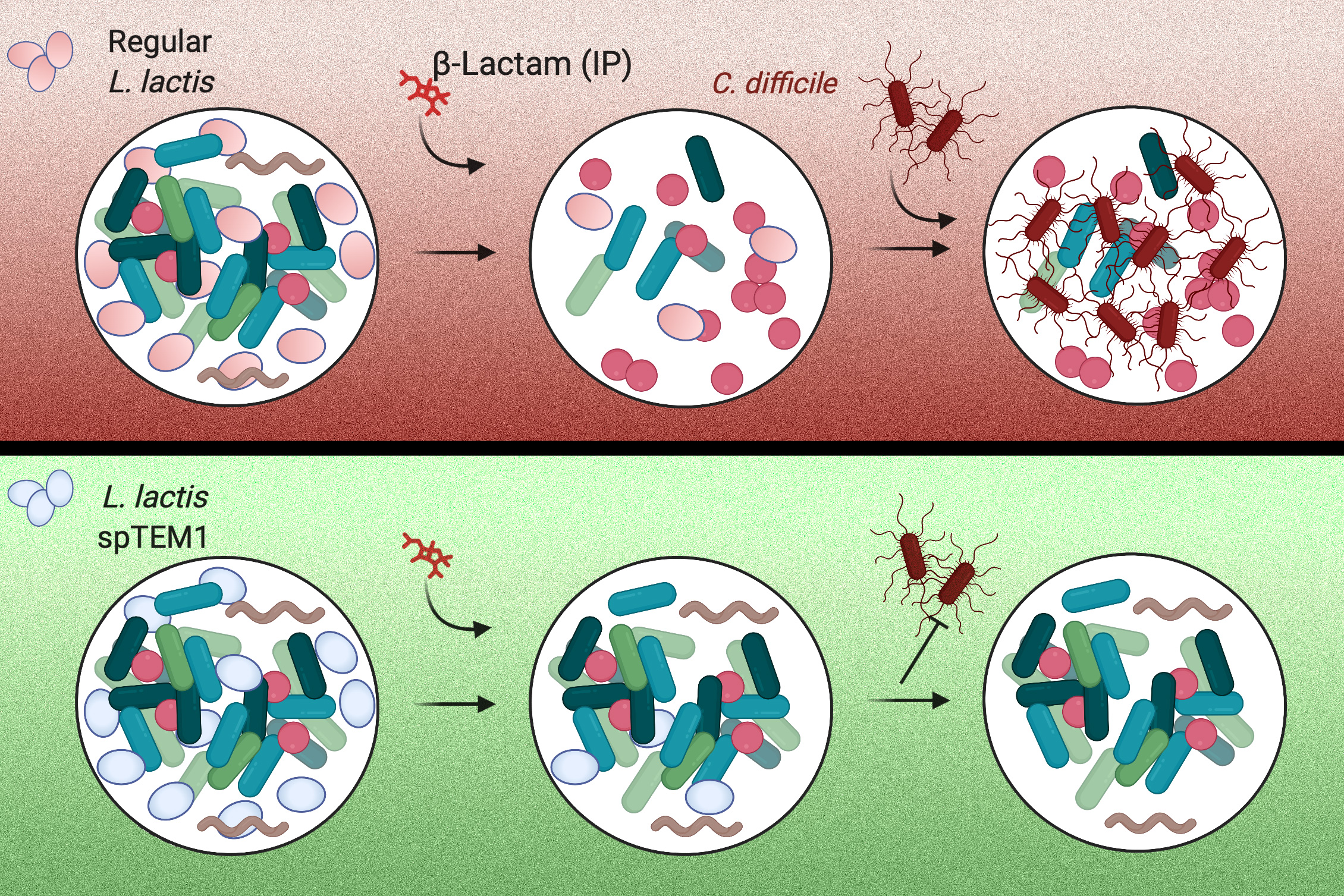
According to MIT news reports, researchers have engineered a strain of bacteria, noted as L. lactis spTEM1 in the image, that can help protect the natural flora of the human digestive tract from antibiotics and prevent opportunistic infections such as C. difficile from developing a Microbes that safely break down antibiotics could prevent opportunistic infections and reduce the spread of antibiotic resistance.

Image of engineered strain of bacteria

Credits:Image: Courtesy of the researchers, edited by MIT News
engineered strain of bacteria

Why Microbiome Science Matters:

MIT researchers engineered a strain of bacteria, noted as L. lactis spTEM1 in the image, that can help protect the natural flora of the human digestive tract from antibiotics and prevent opportunistic infections such as C. difficile from developing.

Content and Image: Courtesy of the researchers, edited by MIT News

Antibiotics are life-saving drugs, but they can also harm the beneficial microbes that live in the human gut. Following antibiotic treatment, some patients are at risk of developing inflammation or opportunistic infections such as Clostridiodes difficile. Indiscriminate use of antibiotics on gut microbes can also contribute to the spread of resistance to the drugs.

In an effort to reduce those risks, MIT engineers have developed a new way to help protect the natural flora of the human digestive tract. They took a strain of bacteria that is safe for human consumption and engineered it to safely produce an enzyme that breaks down a class of antibiotics called beta-lactams. These include ampicillin, amoxicillin, and other commonly used drugs.

When this “living biotherapeutic” is given along with antibiotics, it protects the microbiota in the gut but allows the levels of antibiotics circulating in the bloodstream to remain high, the researchers found in a study of mice.

“This work shows that synthetic biology can be harnessed to create a new class of engineered therapeutics for reducing the adverse effects of antibiotics,” says James Collins, the Termeer Professor of Medical Engineering and Science in MIT’s Institute for Medical Engineering and Science (IMES) and Department of Biological Engineering, and the senior author of the new study.

Andres Cubillos-Ruiz PhD ’15, a research scientist at IMES and the Wyss Institute for Biologically Inspired Engineering at Harvard University, is the lead author of the paper, which appears today in Nature Biomedical Engineering. Other authors include MIT graduate students Miguel Alcantar and Pablo Cardenas, Wyss Institute staff scientist Nina Donghia, and Broad Institute research scientist Julian Avila-Pacheco.

Protecting the gut

Over the past two decades, research has revealed that the microbes in the human gut play important roles in not only metabolism but also immune function and nervous system function.

“Throughout your life, these gut microbes assemble into a highly diverse community that accomplishes important functions in your body,” Cubillos-Ruiz says. “The problem comes when interventions such as medications or particular kinds of diets affect the composition of the microbiota and create an altered state, called dysbiosis. Some microbial groups disappear, and the metabolic activity of others increases. This unbalance can lead to various health issues.”

One major complication that can occur is infection of C. difficile, a microbe that commonly lives in the gut but doesn’t usually cause harm. When antibiotics kill off the strains that compete with C. difficile, however, these bacteria can take over and cause diarrhea and colitis. C. difficile infects about 500,000 people every year in the United States, and causes around 15,000 deaths.

Doctors sometimes prescribe probiotics (mixtures of beneficial bacteria) to people taking antibiotics, but those probiotics are usually also susceptible to antibiotics, and they don’t fully replicate the native microbiota found in the gut.

“Standard probiotics cannot compare to the diversity that the native microbes have,” Cubillos-Ruiz says. “They cannot accomplish the same functions as the native microbes that you have nurtured throughout your life.”

To protect the microbiota from antibiotics, the researchers decided to use modified bacteria. They engineered a strain of bacteria called Lactococcus lactis, which is normally used in cheese production, to deliver an enzyme that breaks down beta-lactam antibiotics. These drugs make up about 60 percent of the antibiotics prescribed in the United States.

When these bacteria are delivered orally, they transiently populate the intestines, where they secrete the enzyme, which is called beta-lactamase. This enzyme then breaks down antibiotics that reach the intestinal tract. When antibiotics are given orally, the drugs enter the bloodstream primarily from the stomach, so the drugs can still circulate in the body at high levels. This approach could also be used along with antibiotics that are injected, which also end up reaching the intestine. After their job is finished, the engineered bacteria are excreted through the digestive tract.

Using engineered bacteria that degrade antibiotics poses unique safety requirements: Beta-lactamase enzymes confer antibiotic resistance to harboring cells and their genes can readily spread between different bacteria. To address this, the researchers used a synthetic biology approach to recode the way the bacterium synthetizes the enzyme. They broke up the gene for beta-lactamase into two pieces, each of which encodes a fragment of the enzyme. These gene segments are located on different pieces of DNA, making it very unlikely that both gene segments would be transferred to another bacterial cell.

These beta-lactamase fragments are exported outside the cell where they reassemble, restoring the enzymatic function. Since the beta-lactamase is now free to diffuse in the surrounding environment, its activity becomes a “public good” for the gut bacterial communities. This prevents the engineered cells from gaining an advantage over the native gut microbes.

“Our biocontainment strategy enables the delivery of antibiotic-degrading enzymes to the gut without the risk of horizontal gene transfer to other bacteria or the acquisition of an added competitive advantage by the live biotherapeutic,” Cubillos-Ruiz says.

Maintaining microbial diversity

To test their approach, the researchers gave the mice two oral doses of the engineered bacteria for every injection of ampicillin. The engineered bacteria made their way to the intestine and began releasing beta-lactamase. In those mice, the researchers found that the amount of ampicillin circulating the bloodstream was as high as that in mice who did not receive the engineered bacteria.

In the gut, mice that received engineered bacteria maintained a much higher level of microbial diversity compared to mice that received only antibiotics. In those mice, microbial diversity levels dropped dramatically after they received ampicillin. Furthermore, none of the mice that received the engineered bacteria developed opportunistic C. difficile infections, while all of the mice who received only antibiotics showed high levels of C. difficile in the gut.

“This is a strong demonstration that this approach can protect the gut microbiota, while preserving the efficacy of the antibiotic, as you’re not modifying the levels in the bloodstream,” Cubillos-Ruiz says.

The researchers also found that eliminating the evolutionary pressure of antibiotic treatment made it much less likely for the microbes of the gut to develop antibiotic resistance after treatment. In contrast, they did find many genes for antibiotic resistance in the microbes that survived in mice who received antibiotics but not the engineered bacteria. Those genes can be passed to harmful bacteria, worsening the problem of antibiotic resistance.

The researchers now plan to begin developing a version of the treatment that could be tested in people at high risk of developing acute diseases that stem from antibiotic-induced gut dysbiosis, and they hope that eventually, it could be used to protect anyone who needs to take antibiotics for infections outside the gut.

“If the antibiotic action is not needed in the gut, then you need to protect the microbiota. This is similar to when you get an X-ray, you wear a lead apron to protect the rest of your body from the ionizing radiation,” Cubillos-Ruiz says. “No previous intervention could offer this level of protection. With our new technology we can make antibiotics safer by preserving beneficial gut microbes and by reducing the chances of emergence of new antibiotic resistant variants.”

The Vaginal Microbiome and Viable Pregnancies

By Rodney Dietert, PhD

Introduction

Hi Everyone. Welcome to the Microbiome Minute with your host…..me, Rodney Dietert, Professor Emeritus, Cornell University, and author of The Human Superorganism.  For about a minute of your time each week, I will share the latest microbiome research and most importantly, why it matters for your better health. Learn a little micro lingo, impress your friends, and most importantly, better connect with your body’s microbial partners.  They have been patiently waiting for your undivided attention

The Story

‘Cooperation between the vaginal microbiome and local immune cells is vitally important in successful pregnancies.  Karen Grewal led a research team from London (Imperial College), Bristol, and Warwick in a study comparing both the vaginal microbiome and the local immune environment among chromosomally-normal, viable term vs. miscarriage pregnancies as well as vs. chromosomally-abnormal miscarriages. Friendly lactobacilli bacteria are predominant in a healthy vagina. When these are depleted, the pH increases, pathogens can take over, and problems usually occur (e.g., bacterial vaginosis). 

These researchers found that chromosomally-normal spontaneous miscarriages were associated with depleted lactobaccili, increased bacterial pathogens, and increased vaginal inflammation (based on specific cytokine levels) compared with viable pregnancies. Chromosomally-abnormal miscarriages seemed to involve a different process.

What you need to know

The take-home message is: monitoring/management of the vaginal microbiome (e.g., lactobaccilli predominance) throughout the pregnancy is critical to

1) keep pathogens minimized,

2) avoid problematic inflammation at the maternal-fetal interface and

3) minimize the risk of miscarriage. 

For the full story click here.

The Microbiome Affects Covid Risk and Outcomes

Rodney Dietert, PhD.

Microbiome and COVID

Introduction

Hi Everyone. Welcome to the Microbiome Minute with your host…..me, Rodney Dietert, Professor Emeritus, Cornell University, and author of The Human Superorganism.  For about a minute of your time each week, I will share the latest microbiome research and most importantly, why it matters for your better health. Learn a little micro lingo, impress your friends, and most importantly, better connect with your body’s microbial partners.  They have been patiently waiting for your undivided attention

The Story

Your microbiome is the frontline defense against most forms of pathogens. SARS-CoV-2 (Covid-19) is no exception. Nikaïa Smith and colleagues at the Pasteur Institute in Paris found that individuals harboring specific bacterial pathogens in the nasopharyngeal region (the nose and upper throat) were at a greater risk of tissue-damaging inflammation (e.g., via a cytokine storm) and severe Covid-19 outcomes than those individuals whose nasal microbiome protected them from bacterial pathogens.  Having certain pathogenic bacteria in the nose and upper throat made it easier for secondary bacterial infections to occur in the lungs during the immune response to Covid-19. Secondary bacterial infections are a major cause of death not only from Covid-19 but also the flu.

Take Home Message

The take-home message is:

  • Your microbiome is your front line defense against potentially life-threatening infections.
  • Take care of your microbiome and you will be better protected against disease.

For additional information and source click here.


The Microbiome First Initiative

Why Microbiome First?

The microbiome and its genes have been shown to have great control over human health. By addressing the microbiome first, before manipulating health with drugs  and medications, researchers suspect that quality human healthcare can be achieved more effectively, at a much lower cost.

The Microbiome First initiative aims to elevate awareness of the extent to which the human microbiome along with its majority of human genes affects all aspects of human development, health, disease and wellbeing.

Including the microbiome in medicine, public health, prevention, nutrition, wellness, and therapeutics is essential if we are to open a path toward sustainable healthcare.

In some cases, the human microbiome may play an adjunct role in prevention and therapy while in many cases [e.g., colonization resistance against infections, prevention of noncommunicable diseases and conditions (NCDs)], it should be the first consideration.

– Rodney Deitert